

Scientific School
7th Scientific School on Blockchain & Distributed Ledger Technologies
Hotel Flamingo Resort – Pula
1-4 June 2026
IMPORTANT DATES
| Application | 15 March 2026 |
| Acceptance notification | 22 March 2026 |
| School dates | 1-4 June 2026 |
Venue
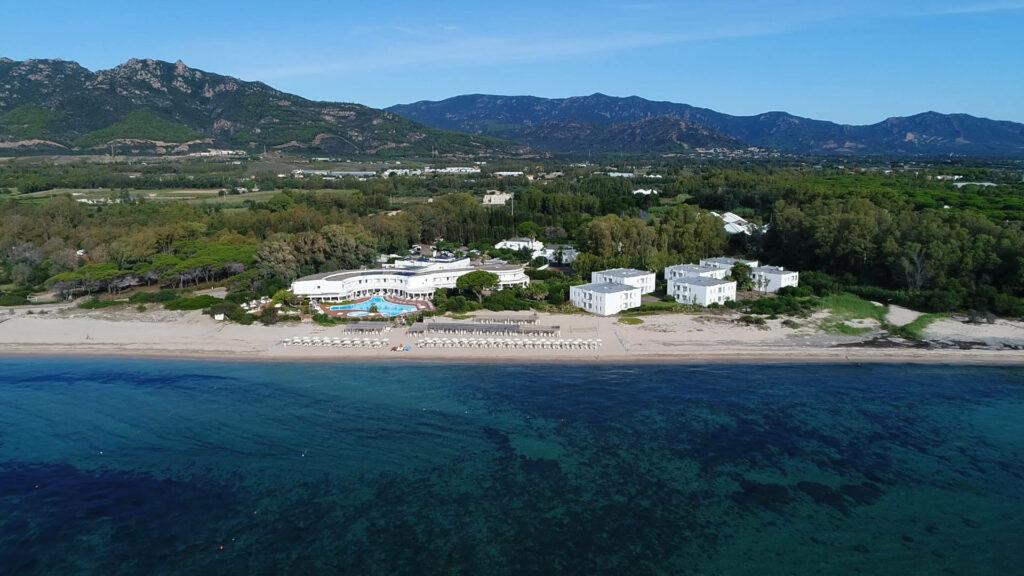
The Blockchain and Distributed Ledger Technologies Summer School, now in its seventh edition, is dedicated to advancing and disseminating knowledge in the rapidly evolving field of crypto-economics, a discipline that has emerged alongside virtual currencies, blockchain ecosystems, and distributed ledger technologies.
Positioned at the intersection of computing, cryptography, law, economics, and game theory, the field is rapidly evolving and increasingly shaping financial systems, digital governance, and large-scale online coordination mechanisms.
The program combines solid theoretical foundations with the exploration of practical applications, including decentralized protocols, tokenized economies, and the regulatory and societal implications of these technologies. It is primarily intended for researchers, PhD students, scholars, and industry professionals, while also welcoming highly motivated undergraduate and recent graduate students with a strong technical background and a genuine interest in the area.
The 7th Scientific School on Blockchain & Distributed Ledger Technologies will be held from 01 to 04 June 2026 in Pula (Sardinia, Italy), Hotel Flamingo Resort.
Registration & selection
The maximum number of participants is 30. The registration fee for the school is 100 euros and travel and accommodation expenses are to be paid by participants. A limited number of rooms is available at a special conference group rate at the Flamingo Hotel, which is the venue of both the Workshop and the Summer School. To benefit from the discounted rate, accommodation must be booked by 31 March 2026. After this deadline, the group rate and room availability are no longer guaranteed. The participants will be selected by the scientific committee on a CV best-match basis. All sessions will be held in English.
Registration link: https://forms.gle/TxPWgvihVfcn8fR76
Lectures
D. Friolo: “Cryptography in Blockchain: foundations and current directions“
This course introduces the basic cryptographic primitives that serve as the foundation of today’s blockchains, including Pseudo-random Functions, Commitments, Hashes, and Digital Signatures, along with practical instantiations. It also presents advanced techniques such as Stealth Addresses and Threshold Signatures, complemented by a short laboratory.
G. Corrias: “Zero-knowledge circuits”
This lecture covers programmable cryptography and Zero-Knowledge Proofs (ZKPs). Building progressively from foundational primitives toward the prover-verifier setting, we will quickly survey contemporary proof systems and their trade-offs. The second part examines how ZKPs interact with blockchain, tracing a path from what ZKPs enable as core protocol primitives to application-layer compositions currently used in Ethereum and beyond. The session closes with a hands-on component where participants write and run circuits live in two domain-specific languages, working through progressively complex examples.
L. Vigneri: “Inside IOTA’s Incentive System: Validators, Rewards, and Fees”
Transaction fee mechanisms play a central role in distributed ledger systems, shaping both network efficiency and participant incentives. This talk introduces the main economic properties used to evaluate such mechanisms, including incentive compatibility, user fairness, and resistance to off-chain agreements and manipulation, following frameworks proposed in recent blockchain economics literature. Building on these foundations, the presentation focuses on IOTA’s incentive system, describing its Delegated Proof-of-Stake architecture, the role of validators and delegators, and the protocol’s reward and fee distribution mechanisms.
M. Zichichi “Move on IOTA is a smart contract language for secure and formally verified programming.”
Move is inspired by Rust use of resource types for representing digital assets, such as currency. IOTA uses a flavour of Move where the ledger is composed of a series of Objects defined by Move structs and indexed by a key. This allows to have so called ‘owned objects’, that behaves similarly to UTXOs, and shared objects, that behaves similarly to shared accounts. This Object-based ledger mixes the benefits of a UTXO-based and an Account-based model. Additionally, Programmable Transaction Blocks enable rich, but safe (no re-entrancy or dynamic dispatch) code composability and Dynamic fields enable safe data composability.
L. Cantisani “Crypto and Tokenised Asset Regulation in Context”
This lecture will examine how DLT technology is reshaping the operational structure of finance and, as a consequence, financial regulation across the globe. On the one hand, DLT enables the creation of speculative native on-chain assets (crypto-assets). On the other, it allows existing off-chain assets to be represented in tokenised form on distributed ledgers.
Regulatory approaches remain far from uniform. Different jurisdictions are moving at different speeds depending on how they assess the risks and opportunities associated with this technological transformation.
The lecture will focus in particular on the most recent developments within the EU regulatory framework, such as MiCA and the DLT Pilot Regime, while also offering a comparative perspective on ongoing developments in the United States, notably the GENIUS Act and the CLARITY Act.
A. Perna: “Entrepreneurship in decentralised technologies”
As an entrepreneur, I view blockchain not merely as a database technology, but as a new paradigm for human and economic coordination. From an economic perspective, it is the ultimate tool to slash transaction costs and resolve the information asymmetry issues that have plagued markets for centuries. During our meeting, we will explore how this technology can transform past economic models while simultaneously creating entirely new ones. I aim to bridge theory with real-world case studies, analysing the landscape from a pragmatic standpoint, and I shall weave in a few personal anecdotes to help bring the narrative to life. My ultimate goal is to see what the Blockchain looks like from an entrepreneur’s perspective.
D. Carboni: “Derivatives and Perpetuals in DeFi: Structures, Mechanisms, and Risks”
Programme
The program will include contributions from both academia and industry, offering participants the opportunity to gain complementary perspectives, discuss ongoing research, and explore possible collaborations and career paths.
June 1, 2026
| Time | Lecture |
| 8:30-9:00 | Opening |
| 9:00-9:05 | S. Bistarelli: Welcome from DLT working Group coordinator |
| 9:05-09:15 | A. Bracciali, M. I. Lunesu: Welcome from the organizers |
| 09:15-10:00 | D. Friolo: Cryptography in Blockchain: foundations and current directions |
| 10:00-11:00 | D. Friolo: Cryptography in Blockchain: foundations and current directions |
| 11:00-11:30 | Coffee break |
| 11:30-13:15 | D. Friolo: Cryptography in Blockchain: foundations and current directions |
| 13:15-15:00 | Lunch Break |
| 15:00-16:30 | G. Corrias “Zero-knowledge circuits” |
| G. Corrias “Zero-knowledge circuits” | |
| 16:30-18:00 | Networking coffee&Study |
June 2, 2026
| Time | Lecture | |
| 09:00-11:00 | L. Vigneri:“Inside IOTA’s Incentive System: Validators, Rewards, and Fees | |
| 11:00-11:30 | Coffee Break | |
| 11:30-13:15 | M. Zichichi:“Move: the Language for Secure Next Gen Smart Contracts” | |
| 13:15-15:00 | Lunch Break | |
| 15:00-16:30 | IOTA lab | |
| 16:30-18:00 | Networking coffee&Study | |
June 3, 2026
| Time | Lecture | |
| 09:00-11:00 | A. Perna: “Entrepreneurship in Decentralized Technologies” | |
| 11:00-11:30 | Coffee Break | |
| 11:30-13:15 | D. Carboni: “Derivatives and Perpetuals in DeFi: Structures, Mechanisms, and Risks” | |
| 13:15-15:00 | Lunch Break | |
| 15:00-16:30 | L. Cantisani: “Legal aspects and the regulatory framework of crypto and blockchain” | |
| 16:30-18:00 | Networking coffee&Study | |
June 4, 2026
| Time | Lecture | |
| 09:00-10:45 | A. Bracciali TBA | |
| 10:45-11:15 | Coffee Break | |
| 11:15-13:15 | Phd report presentation | |
| 13:00-14:00 | Lunch Break | |
Scientific school chairs
- Maria Ilaria Lunesu, University of Cagliari, Italy
- Andrea Bracciali, University of Torino, Italy
Scientific Committee
- Massimo Bartoletti, University of Cagliari, Italy (chair)
- Stefano Ferretti, University of Bologna, Italy
- Claudio Schifanella, Università di Torino, Italy
- Francesco Tiezzi, Università degli Studi di Firenze, Italy
- Roberto Tonelli, University of Cagliari, Italy
Organizing Committee
- Maria Ilaria Lunesu, University of Cagliari, Italy
- Lodovica Marchesi, University of Cagliari, Italy
- Andrea Pinna, University of Cagliari, Italy
Acknowledgements
TBA